Showing posts with label warrior. Show all posts

Friday, November 07, 2008

Conn Iggulden delivers riveting tale in Genghis: Birth of an Empire

A history resource article by  © 2015


I knew very little about the Mongol people before reading this novel. But Conn Iggulden brought the culture to life in a riveting narrative that kept me exercising way beyond my required minutes each day (I listened to the unabridged audible version). Iggulden's incarnation of "Timujin" is that of a warrior of admirable strength and skill as well as a man of vision and deep conviction. Some may also perceive him as ruthless although he appears to have demonstrated more restraint than other men spawned in such an environment. The tribal society Iggulden depicts on the unforgiving steppes is that of a hard people struggling just to survive in a land where the dispossessed (or just unfortunate) were often prey to any passing group desirous of their meager belongings, even if the spoils were just an old worn deel (coat) and a small pouch of rancid mutton. Yet, it was from these very wanderers that Genghis Khan forged a nation.

Mongolian Eagle Master Khairat Khan by Glenn Lewis.  Reproduced by permission CC by nc-nd 2.0
Hunting with eagles is a traditional form of falconry found throughout the Eurasian steppe,  Under Mongol rule, the Kyrgyz preserved their nomadic culture as well as eagle falconry tradition until the 1990s
I appreciated the author's notes at the end that pointed out where his tale diverged from actual events. I had heard that Iggulden had took such liberty with history in his Emperor series about Julius Caesar that some reviewers had said it resembled fantasy rather than historical fiction so I was a little apprehensive about believing too much of what I "learned" about the Mongol culture by reading this work. But, after hearing his explanations about which parts of the story veered from the actual events, I thought Iggulden had done an admirable job of crafting an intensely interesting story that, for the most part, followed the trajectory of Genghis Khan's early life closely enough in most areas that mattered.

Wednesday, June 25, 2008

Steven Pressfield offers thought provoking insight into his writing goals


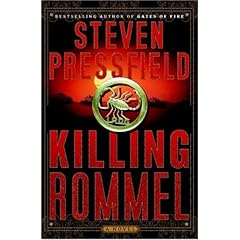
GoodReads.com posted an interesting interview with fellow Oregonian, Steven Pressfield. His current book is entitled "Killing Rommel" about the efforts of the British Long Range Desert Group (I think this group was the basis for the TV series "Rat Patrol") to assassinate the "Desert Fox" in WWII. This is quite a departure from the ancient world that has been his focus in "Gates of Fire", "Tides of War", "The Virtues of War", and "The Afghan Campaign".

In the course of the interview, though, he explained his theme and reasons for writing "Gates of Fire", one of my favorite books, as it pertains to members of the modern military that I found very thought provoking and inspiring:

"Randy, a Goodreads member and Marine comments, "Pressfield uses the battle of Thermopylae...as a backdrop for studying the psychological makeup of what a soldier should be. This is a great book for anyone who is thinking of, or soon will be joining, military service. Those who are confused as to why a friend or loved one wants to join the military can very likely gain their answers from this book." Gates of Fire is required reading at several military schools around the country. Why do you think this is the case? What is it about your book that appeals to the military-inclined mind? Who else could learn from your books?

Steven Pressfield: Gates of Fire has a theme, and the theme is courage. It's also very much about the camaraderie of fighting men and of the warrior ethos. Believe me, this is still alive and well, despite all P.C. efforts to exile it into the past. Today's Marines and soldiers, however, like the rest of us, are woefully undereducated. No one has studied the past, so we all feel as if we're the first people on the planet to be confronting the issues we're confronting. That's where a book like Gates fills a gap. Marines and Army guys read it and realize that the same stuff they're going through has been gone through by a lot of other warriors before them, and that those warriors and the societies they lived in had highly evolved codes of honor and conduct. It gives our young soldiers and Marines a longer historical perspective and inspires them that they're not alone and they're not the first; in fact, they're part of a long and honorable tradition of the profession of arms. It helps!" - more interview